Popular Posts

Showing posts with label Dish Garden Terrariums. Show all posts

Q&A: Can You Identify Mystery Weblike Substance?

Reader Christina shares some photos of a white web like substance appearing in her terrarium. I am not familiar with this particular affliction but I share in hopes that someone else might have experience with this fungus or insect problem.  The best course of action for a mystery fungus is removal of the afflicted areas.  If the problem persists, you may need to empty out your terrarium and try building it again with new plants and soil.

Christina says "I've been noticing a strange white almost weblike thing growing on the branch points of some of my plants. The plants seem to be growing well but I was just wondering if you would happen to know what it is and how I can fix it. I've just been trimming it off hoping it goes away. I haven't had any problems with bugs in it so I don't think it's a nest of any kind. I've attached some pictures of the 2 plants that seem to be affected. My terrarium has quite a large opening at the top that I never cover and it gets a good amount of sunlight."


Pro Terrarium Designer Shares Tips

Photo by Lori Adams,
San Diego Union Tribune
 
 New York Botanical Garden terrarium expert Maria Colletti shares tips from her book "Terrariums: Gardens Under Glass" with San Diego Union Tribune readers. I paraphrase a few tips here, but be sure to read the whole article at the San Diego Union Tribune.

Free Plants: Collecting jade plant pups, succulent pups, or bits of moss from your yard or a park is a great way to obtain small plants to fuel your terrarium fever.  Just be sure to examine for bugs.

Best Face Forward: When placing your plants in your terrarium vessel, turn the plant in place so that its best side faces out.  Angle leaves or branches away from adjacent plants.

Miniature Frog Figurines for Terrariums


Check out these adorable ceramic frog figurines from Siamsmalls.com, perfect for a terrarium or a fairy garden.  The frogs sport a variety of poses and designs, including bright tropical tree frogs and natural looking garden frogs.  Siamsmalls.com ceramic figurines range from one to two and a half inches and have a gloss finish that resists water and sun damage. Check out Siamsmalls.com for the entire range of ceramic animal figurines and other lovely miniatures, and enter the Fern and Mossery Give Away!

I'll be giving away three figurine sets pictured on an earlier post. Enter to win on the entry form located here. Winners will be contacted via email in early October!  Thank you to Janet Linn for posing and photographing these frog miniatures among her own terrariums and fairy gardens.


Terrarium Mini Ceramic Figurine Set Give Away


Finding the right miniature figurines for a terrarium can make all the difference! Siamsmalls.com offers ceramic figurines that will resist water and fading, perfect for a high humidity terrarium or an outdoor fairy garden.  These small painted ceramic figurines range from 1 to 2 inches tall and have flat bases, perfect for nestling among the moss or ferns in your terrarium or dish garden.  Check out Siamsmalls.com for the entire range of ceramic miniature animal figurines and other lovely miniatures, and enter the Fern and Mossery Give Away!

I'll be giving away three figurine sets pictured below. Enter the give away using the form at the end of this post or the entry form located here.

Elephants and Panda Bear Figurine Set
The Elephants and Panda Bear set includes three matte finish elephants, one gloss finish elephant, one extra mini gloss elephant, and a gloss panda bear.*

Farm Animal Figurine Set
The Farm Animal set includes all gloss finish figurines including a cat, raccoon, rooster, rabbit, frog, dog, and a extra mini snake.*
Hippos and Water Animal Figurine Set
The Hippos and Water Animal set includes a blown glass sea turtle,  four hippos and one sea otter.*

*Figurine set giveaways do not include decorative mosses, marbles, or glass vessels.


8 Tips for Growing Succulents in Terrariums

Green succulents are more likely to survive indoors.
Succulents are one of the most popular terrarium plants, because they are easy to find and have a variety of shapes and sizes.  Succulents are frequently recognized as desert plants that prefer sandy soil, heat, and sun.  Terrariums often create humid, damp, warm environments.  How can you be sure that your succulent terrarium will thrive?  One tip is to stick to open-top or dish terrariums when planting succulents.  Dish terrariums, planted in glass dishes rather than bottles, allow soil to dry out in between watering.  Lee Mei Li shares eight tips additional tips for terrarium succulents in The Star Online.  I share tip #3 but be sure to visit the article for the rest of the ideas!
"3. Not all succulents are the same. Some may thrive indoors while others do better outdoors. Start with the greener ones as they are likely to survive better indoors."

50 Terrarium Ideas in the Palm of Your Hand

Cloche terrarium from "Terrarium Craft" book by
Amy Bryant Aiello and Kate Bryant


I recently had the opportunity to read the book "Terrarium Craft: Create 50 Magical, Miniature Worlds" by authors Amy Bryant Aiello and Kate Bryant.  This terrarium book is full of great photos ready to inspire your next terrarium craft.  I enjoyed the fact that the book highlights the intersection of the "crafting" part of terrariums with the "gardening" part.  The art of making and maintaining terrariums truly does involve both crafting and gardening skills.

Fern Fever: The Story of Pteridomania - Victorian Terrarium Craze

Bell jar style terrarium ad, from the
book "Fern Fever"
Collecting ferns and moss was quite the fashion for the Victorians, so much so that one might have called it an obsession.  Fern enthusiasts traded and promenaded their fantastical ferns, going as far as making treks out to the wild to collect rare specimens.  An over-enthusiastic, fern-seeker even tumbled to her death while reaching for an elusive cliff-dwelling specimen.

Sarah Whittingham traces this phenomenon in her glossy book "Fern Fever: The Story of Pteridomania."  Jam packed with lush photos of ferneries, fern grotto gardens, and decorative arts graced with fern fronds, she forms an overwhelming set of evidence for the Victorian fern fever, or pteridomania.

Interestingly enough, young women embraced fern fever the most avidly of all Victorians.  Much like the pop star-crazed tweens of today, Victorian teens were engrossed in trading fern specimen collector cards and begging their parents to install fern grottoes in their basements.  Even the daughter of novelist Charles Dickens developed mild pteriodomania.

An excerpt from the book:

The novelist Charles Dickens was sometimes irritated by his daughter Mary's lack of vigour and purpose in life.  In 1862 he wrote to a friend to whom Mary (then aged 24) had expressed a wish for some ferns to plant in their home: 
"After careful cross examining my daughter . . . I do NOT believe her to be worthy of the fernery . . . When I ask her where she would have the fernery and what she would do with it, the witness falters, turns pale, becomes confused, and says: 'Perhaps it would be better not to have it at all."


"Fern Fever: The Story of Pteridomania"
by Sarah Whittingham
Gosh, Dickens.  Maybe if you hadn't bullied your daughter over it you could have both enjoyed an entrancing fern grotto.  Of course the ferns did hold a sort of "fantastical" fascination for many Victorians.  Some enthusiasts connected ferns with faeries and fantasy, while others touted it as a healthy study of natural science and a great family activity to fern hunt in the countryside on a weekend.  Clever folks published lucrative fern field guides; stuffy folk formed formal fern societies and journals.

Incidentally, all these ferns necessitated all sorts of fern cases, aquariums, terrariums and other methods of constructing suitable environments for the precious and often costly fern specimens.  I share a few copies of the advertisements for Victorian fern cases from the book.


Top Terrarium Plants: Begonias

Begonia veitchii
Begonias make wonderful terrarium plants, as long as you can find a variety that will remain compact enough to fit your terrarium.  If you are unsure of how large your begonia will become - just plan on maintaining a pruning strategy.  And of course - have a game plan for removing dead flowers or foliage.  Are your terrarium tools in order?


Advancegreenhouses.com suggests begonias as one of their top five terrarium plants.  The author points out:

"Begonias are a diverse group of tropical flowers that love humid and moist conditions, and some of them prefer low light as well. They’ll even flower many months out of the year, making them valuable additions to terrarium gardeners. Choose types like Rhizomatous begonias or dwarf Rex begonias. Rex begonias can be a bit finicky about their air circulation, so experiment with propping the lid open to adjust to satisfactory levels. Strawberry begonias absolutely thrive in terrariums–you can’t go wrong with these!"

Be sure to visit their site for the other four top terrarium plants.  Have you grown a begonia in a terrarium?  Tell us about it!

Engage Kids in Flower Shows by Adding a Terrarium Category

Photo by Hugh Fisher, for the Salisbury Post
Flower shows may be waning in popularity but a simple way to build the next generation of gardeners is to involve kids early!  The Retro Flower Show in North Carolina experienced  an increase in competition entries after adding three new kid-friendly categories to a new "youth division:" terrariums, single flowers and dish gardens.

What can kids learn from making terrariums? Terrariums are a great hands-on learning tool for children as they illustrate both plant life cycles and the water cycle.

Robert Mayers, competition judge said:

“A lot of times they garden with their grandparents … It’s good to get them involved in hands-on activities like gardening, and get them thinking.”

Grow Little Terrariums


Kali Vermès, a Paris-based artist maintains Grow Little, her terrarium business.  Read more at babble.com.

Open a New World with a Terrarium Garden


Triblive.com reports on the popularity of terrarium-making classes in the Pennsylvania area, citing the appeal of monitoring a miniature ecosystem right from your desk.  The author also cites a helpful list of plants best suited for terrarium life:

"Plants that work best are those that require low to moderate light, do well in high humidity and can be easily pruned. Ferns, tradescantia, pilea, alternanthera and cryptanthus work well. Begonias and African violets are nice options for added pops of color. Club moss makes a nice ground, and ivy and creeping fig can help round out the look."

Moss Monday: Bonsai of the Japanese Friendship Garden


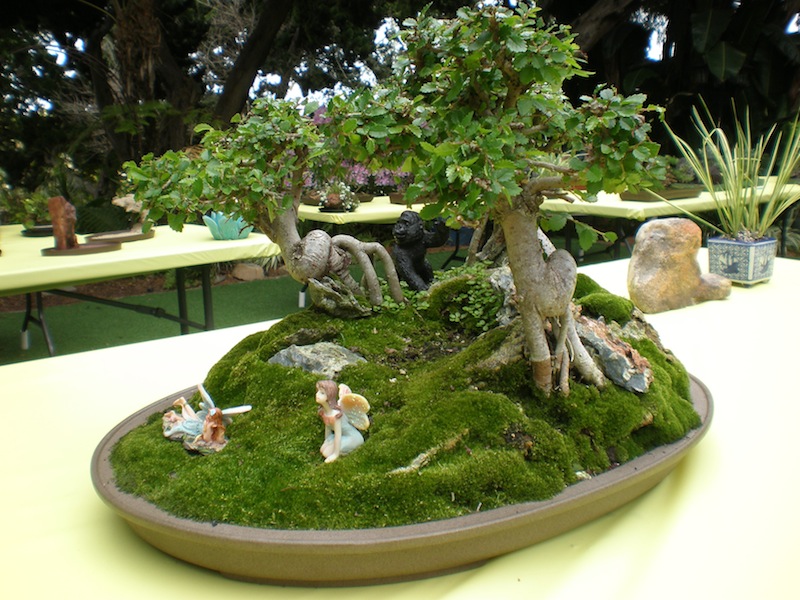
The Japanese Friendship Garden in San Diego recently lost a significant portion of their bonsai collection to a thief.  In spite of that loss, the garden recently hosted a bonsai show with several different style of bonsai.  Thanks to my Dad for taking these photos to share on the blog!  


Minigardener Blog Reports on International Miniature Gardens

Visit the minigardener blog to see Janit Calvo's collection of fun photo spreads of miniature gardens from around the world.  a.) The miniature gardens are out of this world and b.) there is some extremely creative photoshopping of wee folk into the photos that can't be missed!

Edible Terrarium from the White House Chefs


As part of the "Let's Move" healthy eating campaign, White House chefs shared a clever "terrarium" to encourage your picky eaters to grab some fresh veggies.  Layer some hummus and pumpernickel "soil" in a glass dish and plant your veggies in the terrarium!

Succulent Terrarium How-to

Photo from thelittlebigblog.com
A succulent terrarium makes a great gift as the plants need little water to thrive.  Make sure the recipient is aware of their limited needs and see a great tutorial at thelittlebigblog.

Real Simple Terrarium Tutorial


Real Simple Magazine shares a short tutorial on creating a succulent terrarium.  I like the tip about using a paper towel to handle a sharp cactus while transplanting!

Terrarium Plant Primer Video


If you're new to terrariums and are looking for the best plants for terrariums - check out Jacob Taxis' About.com Video introducing several great options.  The plants discussed in the video are quite common and easy to find at plant stores, however he doesn't consistently use genus names or common names.  I'll include the missing name below in case you want to look for both versions of the name.


Peperomia - Wikipedia says its common name is "Radiator plant"?  Got me there.  There are many common cultivars of this one - you'll find it.

Nerve plant (pictured above) - genus is fittonia

Prayer plant - genus maranta

Strawberry begonia - Saxifraga stolonifera

Button fern - Pellaea rotundifolia

Polkadot plants - genus hypoestes

Target.com Fairy Garden Miniatures Set

If you are looking for miniatures to deck out your fairy garden or mini garden, Target.com has a combo kit for just under $30 which includes: a fence, fairy, garden arch, bench, sign, birdbath and watering can.  

Bag End Terrarium


Bilbo would never pine away for Bag End during his travels if he carried with him this miniature ensconced in glass and moss.  "Movie Miniatures: The Shire Lord of the Rings Hobbit Home Terrarium" from Etsy seller FaceoftheEarth.

Succulents on the Brain


After browsing the web for some alternative dish garden plantings for succulent I alighted on ohjoy.blogs.com and this charming couple.  I love the whimsical expressions and cascading succulent head gear.  Unfortunately, the original post is several years old and the links are dead ends.

Have you encountered ceramic planters like this anywhere?